
accesssolutions.net
Square & Rectangular FME Foam Pads — Debris Exclusion for Flat & Non-Round Openings (Safe-T-Sponge®)
Couldn't load pickup availability
For the openings a round plug can't cover
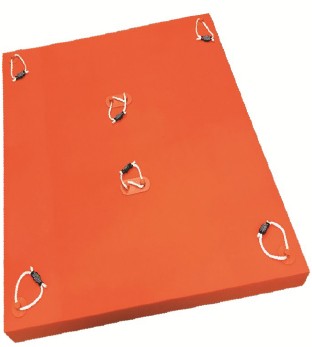
Square and rectangular FME foam pads seal off the flat, slotted, and oversized openings that round plugs don't fit — open trenches and channels, cable and pipe trays, sumps and drains, floor penetrations, large flat ports, and equipment cavities. Lay them in, seat them with a light compression fit, and pull them clear by the lift loops. Same debris-blocking foam as our round sponges, in the shapes that fit the rest of the job.
Choose your shape and finish
- Squares — 12"×12" up to 48"×48", for large flat openings and equipment tops.
- Laminated squares — same sizes with a tough protective top for repeated use and easy wipe-down.
- Rectangles & strips — from 4"×24" up to 24"×48", for long slots, troughs, trays, and channels.
- Lift loops for fast placement and removal; larger pads carry multiple handles.
- Low-halogen, low-metals foam — documented low-contaminant standard, independent lab testing, lot-number traceability; nuclear & fossil compatible.
- Patented design, made in the U.S.A.
Where they're used
Open trenches and grated channels, cable/pipe trays, sumps and drains, floor and deck penetrations, large rectangular ports, tank and vessel openings, and equipment cavities — anywhere a flat or non-round opening needs Foreign Material Exclusion during maintenance, outages, or fabrication.
Specifications
- Shapes: square pads (plain or laminated) and rectangular strips
- Sizes: squares 12"×12"–48"×48"; rectangles 4"×24"–24"×48"
- Max temperature: 212°F (100°C) continuous (standard foam core). Higher temps available as a custom build.
- Material: low-halogen, low-metals foam; laminated squares add a protective top layer
- Sold: individually (each)
- Lead time: made to order, about 5 business days.
- Origin: Made in U.S.A. · Patented (U.S. Pat. 6,506,014 / 6,824,356 / 7,533,698)
Use & care (always follow site FME procedures)
- Size the pad so it seats with light compression across the opening; keep lift loops accessible and centered.
- Inspect before, during, and after use; account for and replace any damaged pad.
- Vacuum loose debris before removing the pad.
- Keep away from welding slag, grinding sparks, flame, and ignition sources (choose laminated where spark exposure is possible).
- Avoid acetone and alcohol-based solvents and oils. Don't soak or immerse. Don't step on or cut the pad.
- Attach a lanyard per your site standards where the opening is vertical or overhead.
Need a custom size, thickness, or cutout (including doughnut shapes)? We build to your dimensions from an emailed drawing — request a quote.
Need a Safety Data Sheet (SDS), certificate of compliance, or RFID-tagged units? Add a note to your order or contact us and we'll provide documentation.
Share